24 January 2025
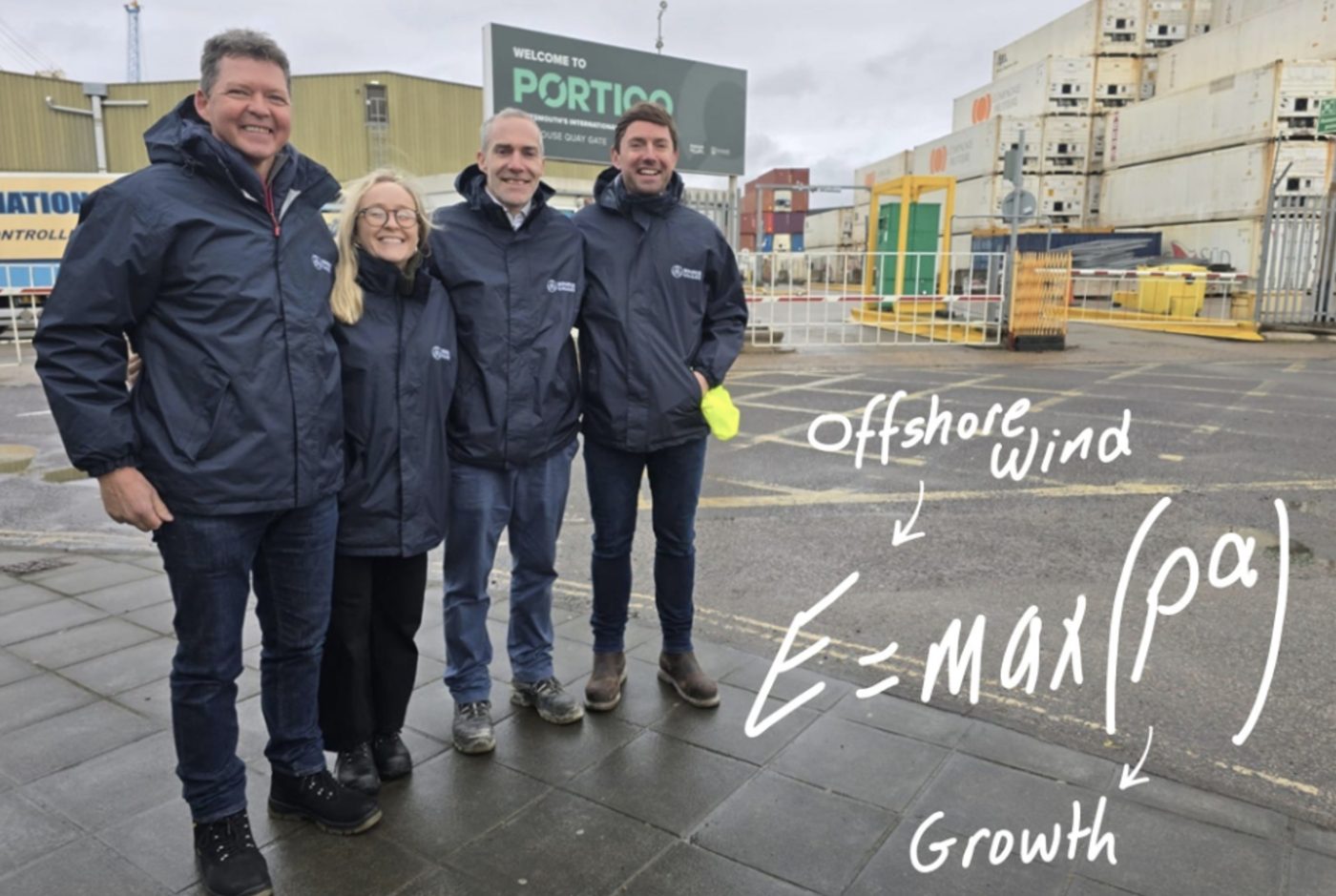
This week, Steve Freeman joined the Source Galileo PortWind team on the ground in the South West, meeting with leadership at Portsmouth and Portland ports. The mission was to understand how these critical infrastructure hubs can support the UK’s offshore wind ambitions from a port and power perspective.
Ports are the beating heart of the offshore wind economy – not just points of arrival and departure. They are the enablers of assembly, maintenance and logistics and every offshore turbine, cable and foundation starts its journey through a port.
However, conversations with port operators reinforced one message – to meet future offshore wind ambitions, scaled power supply is urgently needed in the South West. Without additional grid capacity and substation connections, port expansion plans are impossible to achieve.
The UK’s 50 GW by 2030 offshore wind ambition represents a fivefold increase from today’s ~14 GW installed capacity. Hitting that target could attract over £100 billion in private investment and sustain 90,000 jobs nationwide by 2040.
Each gigawatt of offshore wind capacity requires an estimated £1–1.5 billion in associated port, vessel and supply-chain spending. But ambition alone is not enough as action, not rhetoric, will drive growth.
That’s why regional leaders, businesses and stakeholders are increasingly framing the conversation in economic terms:
E=max(P^α)
Where scaling energy from offshore wind (E) must be optimised (max) to deliver the greatest possible return (α) in prosperity and economic growth (P).
The South West understands this equation better than most. With world-class ports, advanced engineering expertise and a rapidly expanding clean energy ecosystem, the region is uniquely positioned to become a major hub for offshore wind deployment. An offshore wind seabed leasing round in the English Channel could unlock multi-billion-pound opportunities for local industry.
Across the UK, industry analysis by ORE Catapult suggests that at least 11 major ports will require significant upgrades by 2030 to support turbine assembly and maintenance for the next generation of offshore wind farms. Investment at the right scale could unlock £4–6 billion in value and enable regional supply chains to compete globally.
Portland Port’s deep-water facilities are strategically located and well positioned for expansion, making it a key partner in delivering the next phase of co-located industries such as offshore wind and green hydrogen.
The port already supports defence and marine industries, but to fulfil its potential as a clean-energy hub, it needs visibility, certainty, and sustained investment. A clear policy signal and new seabed-leasing opportunities that recognise the South West’s readiness to deploy are now essential. Power at scale means shared prosperity.
With the right decisions today, the South West can play an important role in securing the UK’s energy future and ignite a new era of growth, innovation and regional opportunity. The message from the South West is simple – the region is ready to deliver.